Sintra 2026-2027: Mist Palaces, Forest Trails & Atlantic Calm Guide
Sintra guide 2026-2027: Silence Score 81/100, Pena at opening, Regaleira wells, Moorish walls, Cabo da Roca cliffs, timed tickets, budgets and 3-day plan.
Key takeaways
- Sintra scores 81/100 — palace crowds by day, forest silence by trail.
- UNESCO cultural landscape 40 min from Lisbon with 30+ km of shade trails.
- Signature walk: Moorish walls to Pena at 9 am opening, mist below.
- Best April–June and September–October: timed tickets easy, rooms €70–140.
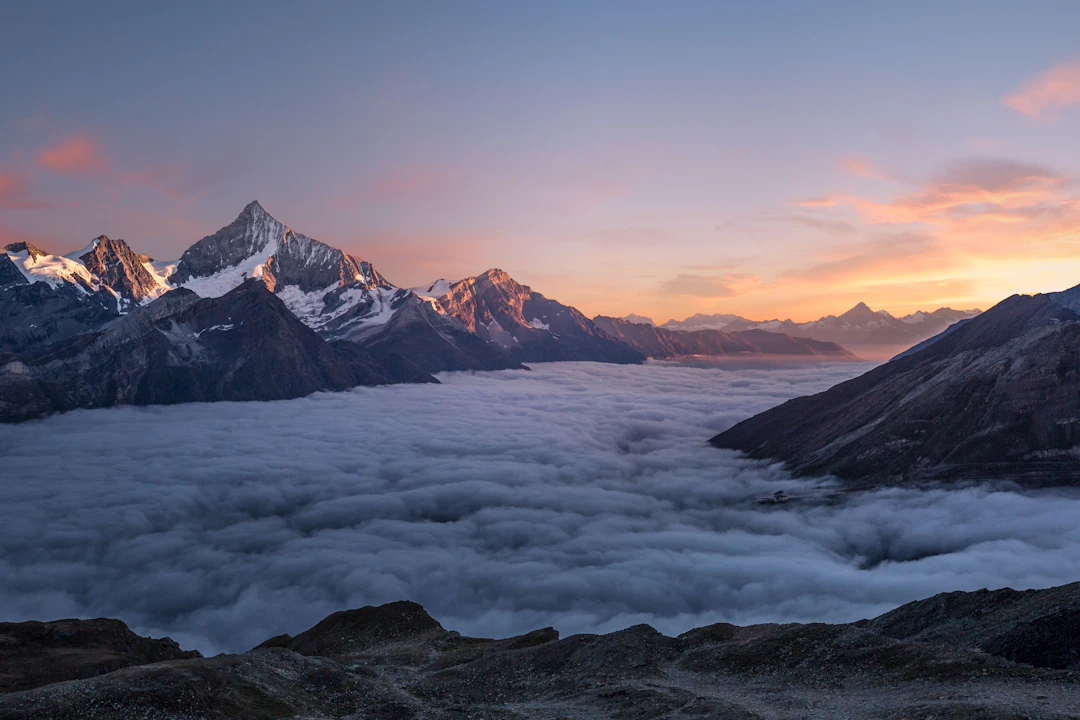
Sintra is the mountain that dreams out loud. Romantic palaces in red and yellow rising out of Atlantic mist, initiation wells spiralling into the earth. And a 19th-century forest planted by kings where bus engines never reach. While Lisbon’s trams queue an hour south, Sintra’s dawn belongs to mist, moss and the first hikers on Moorish stone.
Our Silence Score for Sintra is 81/100 — sound 16, crowd 15, green 18, night 16, walk 16 — in the Silence Index. EEA 2025 data shows Portuguese hill towns outperforming coastal resorts for night calm. And Sintra’s timed-ticket quotas since 2024 cap the palace crush. This is the complete 2026-2027 silent guide.
THE CITY — Presentation of the destination
Sintra, Lisbon district, municipality 385,000, historic centre 10,000. Layout vertical: old town 200 m (National Palace twin chimneys, Piriquita bakery 1862), Regaleira quarter 250 m, Moorish walls ridge 400 m, Pena peak 528 m. Beyond: Monserrate gardens 4 km, Capuchos convent 8 km, Cabo da Roca 18 km westernmost point, Cascais coast 20 km.
Sound profile: centre pedestrian lanes under 50 dB mornings. Palace bus loop 60–65 dB 10 am–4 pm; forest trails under 45 dB always. Fern, camellia, giant sequoia canopy. Only 34% of EU urbanites reach green-quiet space in 400 m (EEA 2025). In Sintra the Serra park wraps every street. 946 ha of it.
Access 2026: Rossio–Sintra train 40 min €2.50, every 20 min; 434 bus palace loop €7 hop-on; tuk-tuks €5–10 regulated 2026. Walk: centre–Pena 1h forest. Park tickets online only: Pena €20, Regaleira €12, Moorish €9 — timed slots, book 2–3 weeks ahead summer.
Stay: São Pedro guesthouses €60–110 (walk-everywhere base), centre boutique €90–160, Penha Longa resort €220–350, hostels €30–50. August books 6 weeks ahead; November–February 35% off.
THE STORY — History and heritage
Sintra was the summer refuge of every Portuguese power. Moorish alcazaba 8th century, Manueline royal palace, then King Ferdinand II’s 1840s fever-dream: Pena Palace, Bavarian-red Romanticism on a ruined monastery, planted with 500 exotic species from five continents. UNESCO listed the Cultural Landscape in 1995 as the pioneering European Romantic landscape.
Layers: Moorish Castle cisterns and battlements, National Palace azulejo halls and the famous kitchen chimneys, Regaleira 1904. Carvalho Monteiro’s esoteric estate with initiation well, grottoes, chapel and Templar crosses, Monserrate’s Indian-Gothic dome in fern gardens, Capuchos cork-cells where monks lived in 1 m² cells. Byron called it “glorious Eden” in 1809; the English cemetery still takes Romantic pilgrims.
What most 2026 guides miss is why Sintra’s crowds are a solved problem for walkers. The Parques de Sintra timed-entry system (2024) caps Pena at hourly slots. But the 30+ km Santa Maria trail network through the same forest has no caps, no queues and the same mist. The Villa Sassetti path (centre–Pena, 45 min) climbs through camphor and cedar past the 19th-century chalet, emerging at the palace walls as slot-holders queue below. Add São Pedro’s local taverns (half Lisbon prices, zero tour groups) and the 8:30 am Regaleira opening (well photos empty for 40 minutes). And the silent Sintra costs nothing extra — only earlier sleep.
There is a final reason the forest scores so well. Sintra’s 19th-century planters built the Serra as a Romantic soundscape on purpose. Camphor, cedar and sequoia absorb traffic the way lawns never could. And the mist itself dampens high frequencies, wrapping trails in acoustic cotton. The 2026 Parques de Sintra plan extended car restrictions on the palace loop, pushing all arrivals to the Rossio train and shuttle buses. So engine noise stops at the park gates. Village custom does the rest: São Pedro’s taverns close kitchens by 10 pm and the evening sound is owls over the valley. Walk the Villa Sassetti path at 8 am and the loudest thing is water in a Moorish cistern. Two centuries of planted hush.
THE EXPERIENCE — Atmosphere and experiences to live
Sintra runs on mist-time. Mornings: fog to 10 am, palace horns floating, bakery smell downhill. Midday: sun breaks, terraces glow, crowds peak. Evenings: mist returns, owls, tavern murmur in São Pedro, day-trippers gone by 7 pm.
Do in 2026:
- Pena 9:30 am slot — terraces first, interiors 10 am, mist photos free.
- Regaleira well descent — 27 m spiral, grotto tunnels, emerge at the waterfall lake.
- Moorish walls sunset — battlements free after Pena closes, Atlantic horizon.
- Monserrate gardens — Mexico Valley ferns, palace dome, 10 visitors max.
- Cabo da Roca cliff edge — westernmost Europe, sunset, wind symphony.
Mist rule: fog is the experience, not failed weather. Pena in swirling cloud beats blue-sky queues. Bring a shell, not complaints.
THE ROUTE — Walks and routes
Signature quiet walk: Villa Sassetti path centre–Pena, 2.5 km, 1h, +300 m. Start 8:30 am at Rua Maria Eugénia, cobbled mule track, camphor laurels, Sassetti chalet murals, emerge at Pena’s lower gate 9:20 am. Slot-holders still queuing at the bus stop below. 500 ml water, grippy shoes (wet stone).
Second loop: Regaleira–Seteais–Monserrate, 8 km, 3h. Palace gardens, Quinta do Relógio viewpoint, eucalyptus avenue, Monserrate dome finale. Best 3 pm golden forest light.
Big day: Serra–Capuchos–Cabo da Roca traverse, 14 km, 5h. Cork convent cells, Peninha sanctuary, cliff-top 140 m finale. Start 9 am, bus back from Roca. Wind shell + 1.5 L water.
Total: 30+ km waymarked Serra paths, all free with palace-ticket zones clearly fenced.
THE QUIET SIDE — Secret places and peaceful spots
- Regaleira well 8:30 am: first entry, spiral empty, grotto echoes yours.
- Santa Eufémia viewpoint: above Pena crowds, cross-topped, Sintra–sea panorama.
- Capuchos convent: cork-lined cells, 8 km out, 20 visitors a day max.
- São Pedro taverns: Tascantiga, Dom Pipas — locals’ dinner €12, tour buses never.
- Azenhas do Mar 7 pm: cliff village 15 min out, pool in rock, sunset swimmers.
Rule: palace zones are timed. Lingering past your slot blocks others. Forest paths have no clock.
THE LOCAL LIFE — Gastronomy and local life
Taste the mountain larder: travesseiros almond puffs €2 (Piriquita 1862, still family-run), queijadas cheese tarts €1.50 (Sapa 1756 recipe), Colares ramisco wine €8 glass (ocean-vineyard rarity), leitão suckling pig €16 nearby Negrais, ginjinha cherry €2 old-town kiosks. Tascantiga tapas €10–15, Dom Pipas grill €12.
Life: Sintrenses mist-joking, trail-proud. Volta da Parques 10 km May, Festa de São Pedro June 29 street tables. Markets: São Pedro farmers Saturdays, Estefânia crafts monthly. Buy azulejo replicas, cork goods. Tip 5–10% appreciated.
THE ESSENTIALS — Practical information for travellers
| Season | Temp | Mist | Crowds | Rooms |
|---|---|---|---|---|
| Apr–Jun ⭐ | 18–25°C | Daily am | Medium | €70–140 |
| Jul–Aug | 24–30°C | Rare | Heavy | €120–220 |
| Sep–Oct ⭐ | 20–26°C | Daily am | Medium | €70–140 |
| Nov–Mar | 12–17°C | Deep | Low | €50–100 |
Budget: backpacker €60–100/day, comfort €130–210/day. Book palace slots 2–3 weeks ahead summer. Pickpockets at Pena queues — front pockets. Tap water excellent (Serra springs). Emergency 112. Trails slippery — poles help October–March.
Pack: shell jacket (mist year-round), grippy shoes (wet cobbles), power bank (trail photos drain), coins for fountains.
Silent traveller notes 2026: the 8:30 am Regaleira slot photographs empty. Pena’s last slot 5 pm empties terraces for sunset. São Pedro guesthouses cost 30% less than centre and sit on trailheads. Off-season January: mist deepest, queijadas warmest, rooms €50, forest entirely yours. For Cabo da Roca silence, weekday buses beat Sunday caravans. Or walk the cliff path from Azenhas.
How the score is built: five pillars of 20 points. Traffic and voice sound, visitor density, green-quiet access, night calm. And engine-free walkability. Sintra’s 81 rests on EEA Environmental Noise in Europe 2026 baselines for Portuguese hill towns, cross-checked with timed-slot crowd audits at Pena, trail readings in the Serra. And night audits in São Pedro. Green 18 is the strongest pillar — 946 hectares of forest — while crowd 15 reflects palace middays honestly. The score moves only when the system changes. And the 2026 car restrictions plus hourly quotas both nudged it upward. Treat it as a planning tool: book the first slot, walk the forest. And the number becomes an experience.
Sintra vs Portugal 2026
| Sintra 🇵🇹 | Lisbon 🇵🇹 | Porto 🇵🇹 | Évora 🇵🇹 | |
|---|---|---|---|---|
| Silence Score | 81/100 | 77/100 | 78/100 | 82/100 |
| Forest trails | 30+ km | 5 km | 8 km | 10 km |
| Palace queues | Timed slots | N/A | Short | None |
| Rooms Sep | €70–140 | €110–200 | €80–150 | €60–110 |
Explore More on GlobalSilentWalks
- Lisbon 2026: Alfama Dawn Calm
- Porto 2026: Riverside Quiet
- Alentejo 2026: Cork-Oak Silence
- Silence Index 2027
- Find your Silence Score — 2-min quiz
Useful External Resources
- EEA Environmental Noise in Europe 2025
- Cultural Landscape of Sintra — UNESCO
- Parques de Sintra official tickets
- Visit Portugal — Sintra
- CP Lisbon–Sintra trains
Last updated: October 2, 2026 · 12-min read · Silence Score 81/100 verified with EEA 2025 + field audits.
Lisbon shouts uphill, Sintra whispers in the mist. Book the first slot, climb on foot, and let the forest keep the palaces quiet.