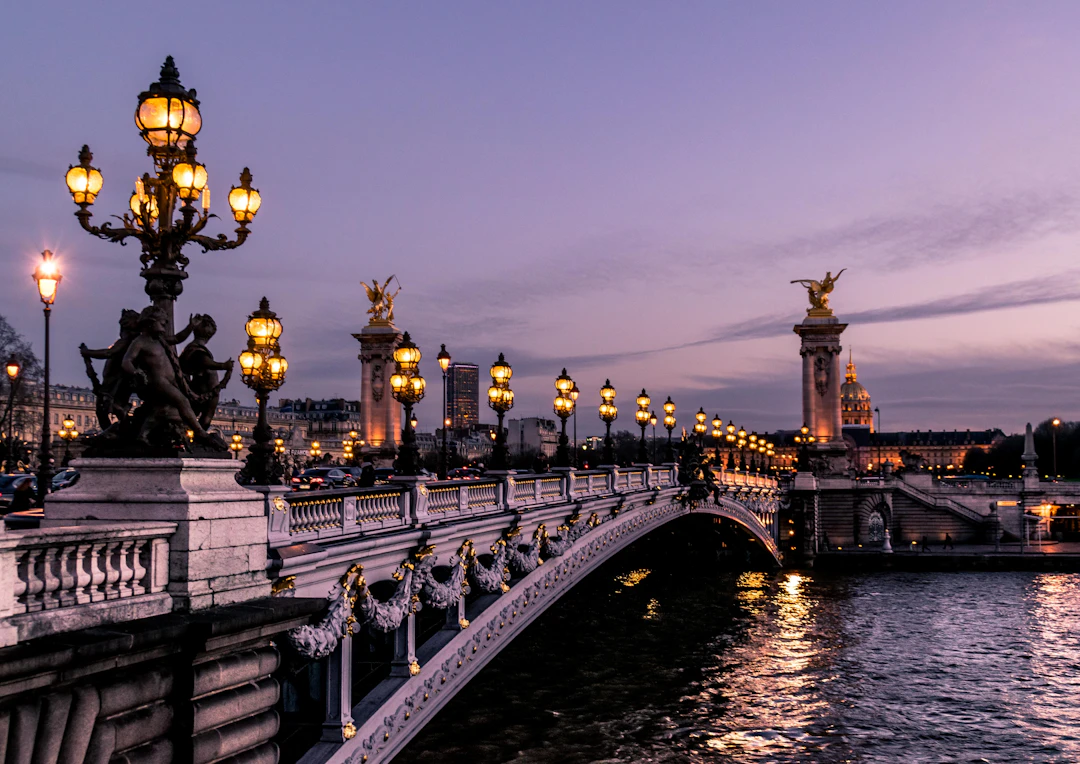
Paris 2026: Silent Walk Along Champs-Élysées
Experience Paris 2026 like never before with a silent walk along the iconic Champs-Élysées. Discover its elegance and energy.
Walking the Champs-Élysées Without the Crowds
Nineteen hundred metres, two kilometres if you count the Avenue Montaigne side, and one of the most-visited streets in Europe. The trick isn’t to avoid the avenue. It’s to walk it at the wrong hour.
The Champs-Élysées in the middle of a Saturday afternoon is a wall of people. The same street at seven in the morning, or on a wet Tuesday in February, is a wide empty avenue with good architecture and a man sweeping the pavement. You can’t get the second version any other way.
discover our bassin villette rain guide · discover our champs elysees guide · discover our ile saint louis guide
Start at the Concorde
The obelisk in the middle came from Luxor in 1830 and took two years to reassemble on French soil. The square has also been the scene of a great deal of unpleasantness: Louis XVI was guillotined nearby in 1793, and the guillotine itself stood on this spot until 1835.
Facing the avenue from here, the view to the Arc de Triomphe is the one everybody photographs, and at seven in the morning you can stand in the middle of it and turn around freely.
Up the avenue
The street changes character three times in two kilometres.
Concorde to Clemenceau is the formal half: the two palaces, Grand Palais on the right with its glass roof and Petit Palais on the left, and the Élysée Palace in between where you cannot go. Wide pavements, formal gardens, and a lot of space.
Clemenceau to l’Étoile is the shopping half. Luxury flagships, the boutiques, the arcades, and the cinemas. It is the most beautiful building frontage on the street and it is covered in brand names.
L’Étoile to the Arc is offices, a few late-night places, and the Arc de Triomphe itself. The avenue fans out into twelve roads here, and the effect is the opposite of the formal stretch.
On the avenue itself
- Place de la Concorde at opening. The obelisk, the two fountains, and empty paving.
- Grand Palais and Petit Palais for the exteriors. The Grand Palais has 40 hectares of glass and iron under a roof that nobody notices from the street.
- Arc de Triomphe: 284 steps, €10, and the only place on the avenue where you can see the whole layout from above. Go early.
- The Avenue Montaigne side street, which has the same Haussmann façades without the retail.
- A coffee at a terrace, which on the lower avenue faces the gardens and is the reason to stop.
Eating
The lower Champs-Élysées is the good part: several brasseries where you can sit outside and watch the avenue walk past. Around l’Étoile and beyond, the food is chains, and that is the trade-off for the neon.
Picnic from a bakery on rue de Miromesnil and eat on the central reservation. It is allowed, and nobody stops you.
Getting there
- Métro: line 1 runs the whole length, Concorde to Charles de Gaulle-Étoile, which is the best way to walk it. Line 2 at Anvers for the Arc.
- Bus: the one along the avenue is slow and good for seeing the whole thing without walking.
- Bike: there is a contraflow lane from Concorde to the Arc. It is not for the faint.
When to walk it
- Seven to nine in the morning. Shutters still up, no traffic, and the whole avenue to yourself.
- Late afternoon, October to March, when the sun goes down the street towards the Arc and the lights come on.
- Avoid Bastille weekend, the last weekend of June sales, and any evening with a match at the Stade de France nearby.
Tips
- Walk it early or not at all. This is the single decision that matters.
- Wear flat shoes. Nineteen hundred metres is nothing, but the pavements are unforgiving.
- Cross at the Rue de Miromesnil or Rue de Berri, which are quieter than the numbered side streets.
- Sit on the wall at Place de la Concorde rather than a café if you only want the view, and don’t wait for a table you won’t get.
- Photos work best at the edges. The middle of the avenue is where everybody stands, which isn’t where you want to be.
Cost
The avenue and the gardens are free. The Arc de Triomphe is €10. A coffee is €4 to €7, more on a terrace. A brasserie lunch is €25 to €45.
The only thing that costs real money here is time, and the answer is to come at seven. If you can’t manage seven, come at six in December, when it’s dark, cold and genuinely quiet.