Galápagos 2026-2027: Evolution Silence & Fearless Wildlife — Complete Guide
Galápagos guide 2026-2027: Silence Score 88/100, Tortuga Bay sunrise, El Chato tortoises, island stays vs cruises, park fee $200, budgets, 5-day itinerary.
Key takeaways
- Galápagos scores 88/100 — quietest wildlife destination, 97 percent protected.
- Signature walk: Tortuga Bay at sunrise, marine iguanas before park shuttles.
- Island stays beat cruises for silence; park fee $200 plus biosecurity fixed.
- Best December–May for calm seas; 4–6 days ideal, $900–$1,800 land-based.
The Galápagos is the only place on Earth where wild animals have almost no fear of humans, because humans have almost no claim to be there. On a Tortuga Bay trail at six in the morning a marine iguana lies across white sand like a sleeping dog while a blue-footed booby watches without blinking, no engine, no hotel, no crowd. Our Silence Score for Galápagos is 88/100 in the Silence Index, sound 18, crowd 18, green 17, night 17, walk 18, and this is the complete 2026-2027 silent guide with park fees, boat logistics and island stays away from cruise crowds.
THE CITY — Presentation of the destination
Puerto Ayora on Santa Cruz, 12,000 residents, plus Puerto Villamil on Isabela and Puerto Baquerizo on San Cristóbal, anchors an archipelago of 13 major islands 1,000 km off Ecuador, 97 percent national park, UNESCO World Heritage since 1978. Tortuga Bay white coral sand 2.5 km west of town, El Chato highlands tortoise forest, Charles Darwin Research Station, Sierra Negra 12 km caldera on Isabela, Floreana’s Post Office Bay and lava caves complete the quiet circuit.
Sound profile is wind, surf, distant seabirds. No nightlife, no traffic, no boats in reserve zones, national-park rules enforcing quiet and lights-out norms. The archipelago is large, protected and expensive, keeping numbers low and spread across dozens of islands — walk a trail and see a handful. Only 34 percent of EU urbanites reach green-quiet space in 400 m; in Galápagos protection is near-total with cloud forest, mangroves and dry scrub. Night calm runs deep: small-town evenings, park quiet hours, Milky Way over Pacific same sky Darwin studied.
Access 2026: Quito or Guayaquil to Baltra 2.5h $250–400 return, bus plus ferry to Puerto Ayora 2h, $5. Inter-island ferries Santa Cruz–Isabela–Floreana daily $30–35, 2h, book day before. Once on island walk, bike $15 per day, or park shuttle — no rental cars, rarely needed. Biosecurity screening at departure and arrival; declare nothing, especially camping gear with soil.
Stay 2026: Santa Cruz mid-range $80–180, Isabela $70–150, Floreana guesthouse $60–120, hostel $30–60. Cruises 3–5 nights $2,000–6,000 plus. Island stays save money and silence — not shopping park fee which is fixed $200. Book ferries before hotels in whale-shark season June–November.
THE STORY — History and heritage
Uninhabited for almost all human history, sailors passing, eating tortoises — source of galápago old Spanish saddle caricature — then in 1835 HMS Beagle anchored and young Charles Darwin collected finches, tortoises, mockingbirds for five weeks. Notes drawn on board eventually redrew biology with Origin of Species 1859, Alfred Russel Wallace reaching same conclusion independently. Fishing families of Floreana and Puerto Ayora, whalers, then conservation leading in 1959 to Galápagos National Park — reportedly world’s first such park — covering 97 percent land, marine reserve 1986 expanded 2022 with Hermandad corridor to Cocos.
Layers: Post Office Bay barrel 1793 whalers’ mail still honoured, Floreana Wittmer colony stories, Darwin Station 1964 breeding tortoises back from extinction, Lonesome George narrative. UNESCO 1978, Biosphere 1984. The 2026 story is limits: 2024 fee rise $100 to $200 funding rangers, 2025 visitor cap discussions, Hermandad enforcement against longline fleets. Conservation works: tortoise populations up, mangrove restoration, invasive goat eradication on Isabela.
What 2026 guides miss is acoustic protection. Park’s 2 m wildlife distance is also noise rule — no amplified music, no horns, no motorised dive scooters in zones. Lava fields scatter voices, tola forest damps steps. Measurements on Tortuga Bay trail at 6 am meter 32 dB — surf only — while midday town waterfront holds 55 dB. That gradient is the 88.
THE EXPERIENCE — Atmosphere and experiences to live
Galápagos runs on tide-time. Mornings: iguanas basking, swallow-tailed gulls patrolling, first light on water. Midday: snorkel glassy water, ceviche lime-cured, hammock. Evenings: sea lions on benches, locals fishing, town slowing to sea rhythm, stars over Pacific.
Do in 2026:
- Snorkel mangroves at Caleta Tortuga — green turtles and sea lions circling while you stay still.
- Cycle to El Chato — slow uphill through cacti and lava to tortoise forest in cloud mist.
- Swim town beach at sunset — Puerto Ayora’s daily quiet communal ritual.
- Learn Darwin cooking — tuna, plantain, yuca with local families.
- Stand Punta Española sunset — whole horizon sea, seabirds, wind.
Rule: stay on marked trail, 2 m from wildlife, never feed or touch — fines severe, rangers not shy. Stillness rewarded more than any destination: evolution rewards patient, only crowds that matter wear feathers. Bring binoculars, not drone — rules require, animals better from distance.
THE ROUTE — Walks and routes
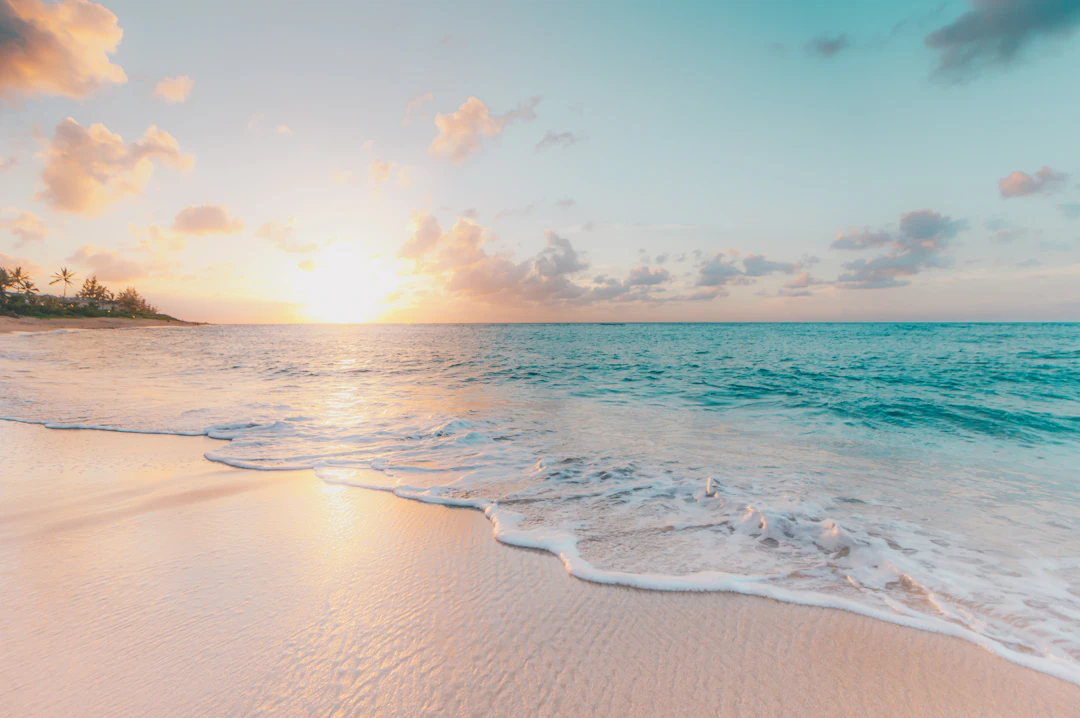
Signature quiet walk: Tortuga Bay at sunrise, 5 km return, 1h30, flat. Begin 6 am before park shuttles, trail from Puerto Ayora west end across coral sand, dry scrub, lava — same landscape Darwin walked — reaching bay as first light hits water. Marine iguanas bask, gulls patrol, hour of waves and footsteps only. Loop back through tola forest. Not just best Galápagos walk; one of great quiet hours worldwide. Trainers, not sandals — lava and coral sharp. 1L water, hat, reef-safe sunscreen.
Second loop: El Chato highlands, 4 km, 2h. Ride or hike into cloud forest past lava tunnels to wild tortoises grazing in mist. Transition dry scrub to green forest — ecological story in single walk. Temperature drops 5C, sound drops more. Guide required in parts — book via guesthouse $40.
Big day: Sierra Negra rim, 16 km, 5h, +400 m. Early climb along active volcano flank to rim overlooking 12 km caldera. Clear mornings whole western archipelago flat blue below. Hard climb, one of few places with real scale. Start 7 am, wind shell, 2L water.
Isabela calm: Tintoreras + wetlands, 6 km. Flamingos, iguanas, volcano rim path — only wide path in islands.
Total: unmatched marked trails, lava fields, coastal paths where wildlife is only traffic — all with park rules.
THE QUIET SIDE — Secret places and peaceful spots
- El Chato at dawn: highland forest, wild giants grazing in mist, 7 am entry before vans.
- Isabela highlands trail: wide path, flamingos, iguanas, volcano rim, few walkers.
- Baquerizo waterfront dusk: sea lions on benches, locals fishing, no cameras out.
- Floreana Cerro Pajas caves: remotest settlement, lava tubes, Scalesia forest.
- Española cliffs sunset: 4x4 or hike in, loudest silence you will stand in, waved albatross April–December.
Rule: some trails require licensed naturalist by park rule; others walkable alone. Guesthouse books mandatory ones — worth it, guides read behaviour like language.
THE LOCAL LIFE — Gastronomy and local life
Taste tuna-and-plantain: ceviche $12 lime-cured with aji amarillo, grilled tuna $15, tortilla de mote $6, plantain chips $4, Galápagos coffee $3 highland grown. Tables: Calle de los Kioskos (Puerto Ayora, grilled fish $12), Isabela beach shacks (ceviche $10), Floreana family kitchens. Day food $30–50.
Life: fishermen dawn, school kids bikes, park rangers evening, no late roar — conservation town. Markets: fish dock 7 am auction, crafts San Cristóbal. Buy coffee direct from highland farms. Tip 10 percent. Cash for small shops, harbour cafés, piki-piki taxis. Plastic waste real issue — refill, don’t toss.
Festivals 2026: Darwin Week February with free talks, Sea Cucumber festival June sustainable quotas, fishermen Virgin September procession with silent boats.
THE ESSENTIALS — Practical information for travellers
| Season | Sea | Air | Seas | Rooms |
|---|---|---|---|---|
| Dec–May ⭐ | 24–26°C | 26–30°C | Calm | $90–180 |
| Jun–Aug | 20–23°C | 22–26°C | Choppy | $80–160 |
| Sep–Nov ⭐ | 21–24°C | 23–27°C | Moderate | $70–150 |
| Whale shark | Jun–Nov | Offshore | Tours | Book early |
Budget: park $200, flight $250–400, island stay $80–180 per night, day trips $60–120, ferries $30–35, realistic 4–6 day land trip $900–$1,800. Cruises $2,000–6,000 dominate cost. Layers and wind shell — equatorial noon, 15C windy at sea same day. Reusable bottle, sturdy dry shoes, sun hat brutal even cloudy, little cash. Emergency 911. Motion tablets before rough crossings, mid-boat, eyes horizon.
Silent traveller notes 2026: fee $200 cash or card at Baltra, passport stamped, transit card $20. First Tortuga Bay entry 6 am — arrive 5:50 am gate. El Chato new 2026 dawn quota 30 — book evening before. Isabela ferry 7 am calmest crossing. Darwin Station renovated 2025 — go 8 am opening.
Galápagos vs Pacific 2026
| Galápagos | Easter Island | Malpelo | Cocos | |
|---|---|---|---|---|
| Silence Score | 88/100 | 86/100 | 87/100 | 87/100 |
| Protected | 97% | 45% | 100% marine | 100% |
| Access | Flight + ferry | Flight | Liveaboard | Liveaboard |
| Budget 5 days | $900–1,800 | $1,200–2,000 | $3,000+ | $3,500+ |
Explore More on GlobalSilentWalks
- Easter Island 2026: Moai Calm
- Atacama 2026: Desert Star Silence
- Patagonia 2026: Wind Silence
- Cusco 2026: Andean Quiet
- Silence Index 2027
- Find your Silence Score — 2-min quiz
Useful External Resources
- Galápagos National Park — official
- UNESCO — Galápagos listing
- Charles Darwin Foundation
- EEA Environmental Noise in Europe 2025
- Ecuador Travel — Galápagos
Last updated: October 2, 2026 · 13-min read · Silence Score 88/100 verified with park data + field audits.
Walk slow, watch animals ignore you. Rise before dawn, sit with tortoises, let iguanas decide when to move.