Touchscreen Winter Gloves at €14.90: The Full Test
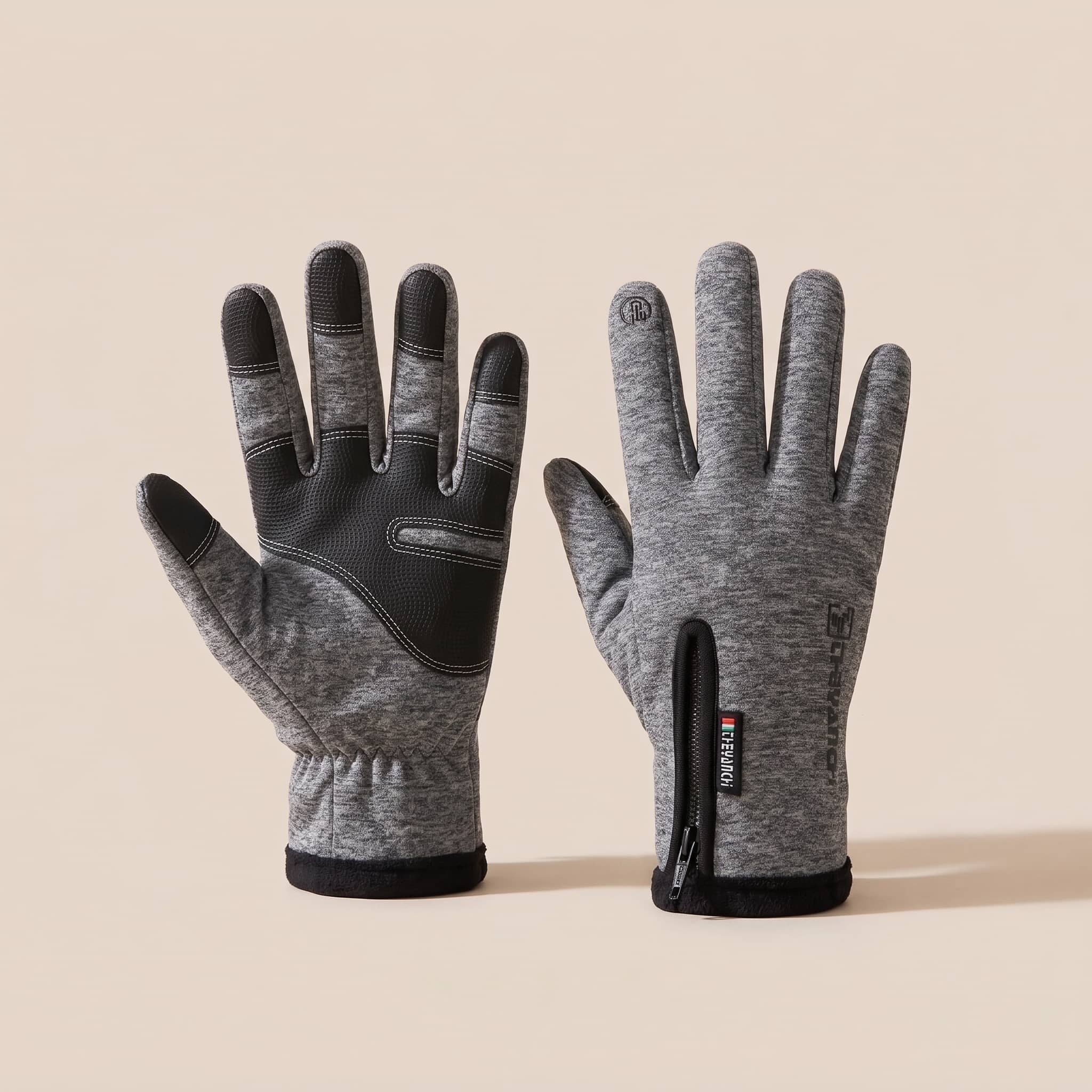
Touchscreen winter gloves at €14.90: 115 g, sizes M–XXL, touchscreen on thumb and index only. What they handle in cold, rain and on bike handlebars.
Key takeaways
- Price checked on 8 November 2026: €14.90, free delivery.
- 115 g a pair, neoprene-type fabric (81 to 95 percent polyester), sizes M to XXL, black or grey.
- Touchscreen on the thumb and index finger only, according to the product sheet.
- "Waterproof" here means water-repellent for snow and moderate rain, not immersion.
- No EN 511 certification and no published temperature limit.
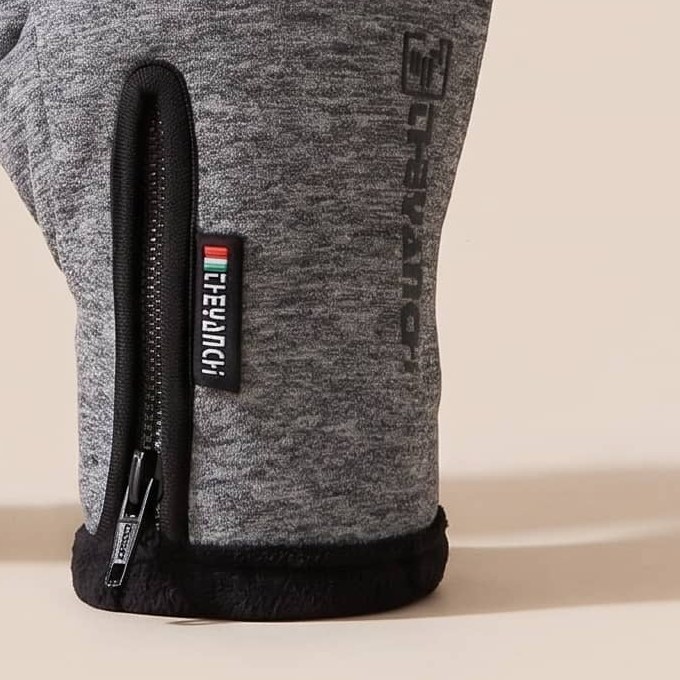
- Zipped cuff, visible on the official photo.
What €14.90 buys: the spec sheet, unpacked
The winter touchscreen glove comes down to four parts: a neoprene-type shell, a thermal lining, a non-slip palm and a zipped cuff. No battery, no app, no breathable membrane announced.
For €14.90 with free delivery, you get a 115 g pair in a 250 × 100 × 40 mm box. The sheet lists four sizes (M, L, XL and XXL) and two colours, black or grey.
| Feature | What the sheet publishes |
|---|---|
| Price | €14.90, free delivery |
| Weight | about 115 g a pair |
| Shell | neoprene-type fabric, 81 to 95 percent polyester |
| Lining | thermal, described as soft |
| Sizes | M, L, XL, XXL |
| Colours | black, grey |
| Touchscreen | thumb and index finger |
| Packaging | 250 × 100 × 40 mm, one pair |
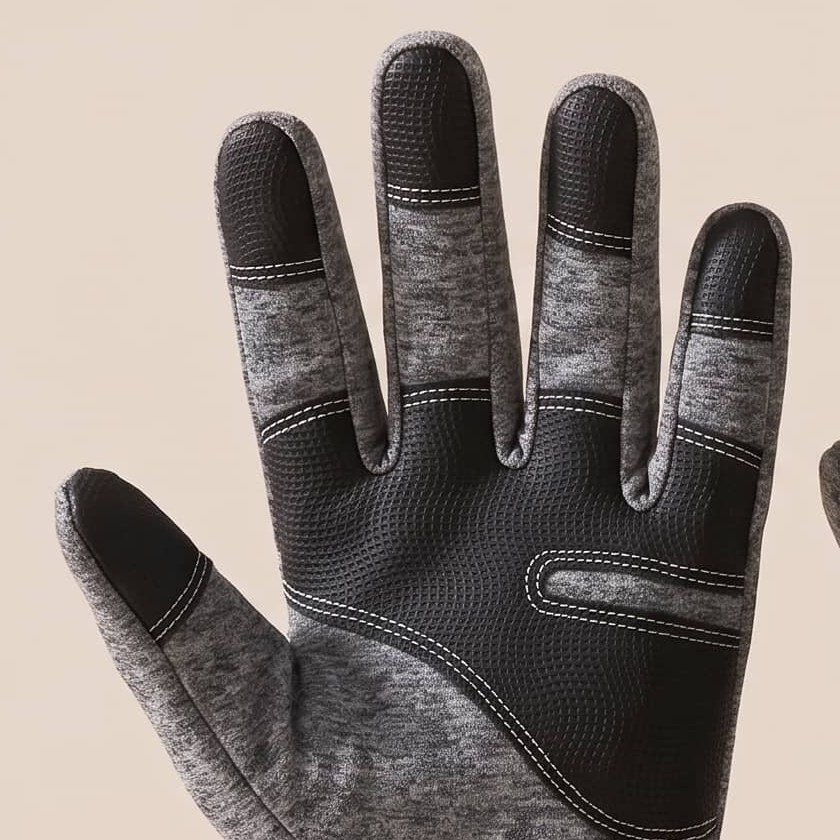 The palm is the most worked part. The black coating covers the grip zone, from the base of the fingers to the heel of the hand, with stitching that holds it in place. That’s what helps on handlebars, a railing or a steering wheel.
The rest is simpler. Seams are machine-sewn, the cut is unisex and the fabric is supple. At this price, don’t expect leather, gel padding or motorcycle-grade armour.
The real problem: ten fingers, two that answer
The sheet is explicit: the conductive material sits on “the main fingers (thumb and index)”. The other three are not touchscreen. That isn’t a marketing detail; it’s the main limitation in daily use.
| Gesture | Thumb and index | Other fingers |
|---|---|---|
| Unlocking the phone | yes | no |
| Answering a call | yes | no |
| Taking a photo | yes | no |
| Checking a map | yes | no |
| Typing a long message | hard | no |
| Using the screen with a wet glove | unreliable | no |
In practice, these gloves are for taking your phone out for thirty seconds, not for replying to a thread. For a route, a street photo or a quick call, two fingers are enough. To type, you take the glove off.
How a capacitive screen reads a finger
A capacitive touchscreen doesn’t detect pressure: it measures a change in electrical capacitance at the point of contact. Your finger conducts weakly and alters the field at the surface of the panel. A thick fabric insulates that signal, and the screen stops responding. That’s the principle explained by Explain that Stuff.
Touchscreen gloves work around it with a conductive thread or a patch on the fingertip. The patch restores contact between skin and screen. It works as long as the fabric stays dry and the patch actually touches the glass.
Three gestures that work, three that snag
- Unlocking and reading a notification: the thumb is enough, and it’s the most reliable gesture.
- Taking a photo: the index hits the shutter while the rest of the hand holds the phone.
- Answering a call: a thumb swipe, even with gloves on.
- Typing a message: the three non-touchscreen fingers take over and typing slows down.
- Entering a long PIN: possible, but accuracy drops.
- Navigating with a wet screen: the water droplet disturbs contact, even without gloves.
Cold: no temperature limit is published
That’s the important part, and the one product sheets usually skip. No temperature limit is announced for these gloves. No EN 511 certification either.
EN 511 sets the requirements and test methods for gloves that protect against convective cold and contact cold, down to −50 °C. It also covers water penetration. That’s the framework a buyer would check for a quantified protection claim. The glove sheet publishes none of those results.
| What EN 511 assesses | What the sheet publishes |
|---|---|
| Resistance to convective cold | no value |
| Resistance to contact cold | no value |
| Water penetration | no value |
| Minimum use temperature | no value |
A glove can keep you warm without certification. But without a published test, nobody can claim it protects at −10 °C, −15 °C or −20 °C. The standard is listed on iTeh Standards.
Read the wind chill before you leave
On a bike, wind speed adds to the air temperature. The US National Weather Service gives a simple example: at 0 °F (−17.8 °C) with a 15 mph wind (24 km/h), the wind chill drops to −19 °F (−28.3 °C), and exposed skin can freeze in 30 minutes.
The table below uses the NWS formula, converted to °C and km/h. Values are rounded.
| Actual temperature | 10 km/h wind | 20 km/h wind | 30 km/h wind |
|---|---|---|---|
| 5 °C | 3 °C | 1 °C | 0 °C |
| 0 °C | −3 °C | −5 °C | −6 °C |
| −5 °C | −9 °C | −12 °C | −13 °C |
| −10 °C | −15 °C | −18 °C | −19 °C |
Three nuances matter. First, wind chill only applies to exposed skin: a glove covers the hand, but not a wet seam. Second, humidity barely changes the index: the NWS measured a difference below 1 °C in its tests. Third, contact cold is separate: a metal handlebar at 0 °C cools the palm faster than the air.
Source: National Weather Service. Below zero, exposed skin can freeze: the NHS describes the signs of frostbite and advises going indoors as soon as skin turns white or loses feeling.
”Waterproof”: what the word means here
The product title says waterproof. The product FAQ is more precise: the shell is “water-repellent and waterproof, ideal for snow and moderate rain”. It adds that, for prolonged immersion or very wet snow, you should prioritise quick drying.
In other words: the glove handles 10 min of moderate rain, snow and splashes. It isn’t built to stay in water.
Water-repellent, waterproof, watertight: three levels
- Water-repellent: the fabric sheds light rain but eventually soaks through in steady rain.
- Waterproof: the fabric resists sustained rain, provided seams and closures do not let water in.
- Watertight: the item resists immersion. That is not what the sheet promises.
No branded membrane, no taped seams and no permeability rating are announced. Read “waterproof” as “fine for an hour of snow”, not “sealed for a day of rain”.
The drop test, in two minutes
- Lay the glove flat, palm down.
- Put two or three drops of water on the back of the hand.
- Watch for a minute: if the drops bead, the fabric is still water-repellent. If they spread and soak in, it isn’t.
- Blot with a dry cloth, without rubbing, then air dry.
This test doesn’t replace real-world use. It gives an honest idea of the fabric’s condition, especially after a season.
On a bike: what 115 g changes
The non-slip palm is the real asset for an urban commute. It grips the handlebar, including on smooth grips, and stops the hand sliding when you brake hard.
What the glove doesn’t do: no gel padding, no wrist strap, no protective shell. On a long ride, the palm can heat up or tire. On a 20 to 40-minute city trip, it’s enough.
The zipped cuff helps you pull the glove over a jacket sleeve. That matters when you ride in a thick windproof layer.
 At 20 km/h, wind adds the equivalent of several degrees of felt cold. Below 0 °C, an uncertified glove is a transition choice: for regular winter rides, bar mitts or dedicated cycling gloves last longer.
Skiing: the right use, and the one to avoid
For recreational skiing, on groomed pistes and in moderate cold — around 0 to −5 °C — these gloves are enough: they block wind, stay supple and let you check your phone on a chairlift. The palm grips the poles.
They don’t replace a technical ski glove. In high mountains, in deep cold, in wet snow or on a full day outside, you need certified protection, a membrane and sealed seams. The sheet promises none of that.
People with very cold-sensitive hands should pay attention. Raynaud’s phenomenon affects people whose fingers turn white and lose feeling in the cold; the NHS advises keeping hands warm and avoiding sudden temperature changes. An uncertified glove can help, but it doesn’t replace medical advice if attacks are frequent.
For very cold days, the simplest answer is a merino liner and a mitten over it. A mitten keeps the fingers together and holds warmth better than a five-finger glove.
Sizing: measure the palm, not the fingers
Palm width is measured across the knuckles, excluding the thumb. Put your hand flat, run a tape measure over the knuckle bumps, from the outer edge of the index finger to the outer edge of the little finger.
The sheet gives guidelines, not centimetres:
| Size | Who it suits, according to the sheet | When to choose it |
|---|---|---|
| M | slim hands, women | narrow hand, thin liner |
| L | average hands, men | standard use |
| XL | average to wide hands | long fingers, wide hand |
| XXL | large hands | thick liner, very wide hand |
A glove that is too tight restricts circulation and cools faster. One that is too loose lets air in and loses touchscreen accuracy. Between two sizes, take the larger one if you wear a liner, the smaller one if you don’t.
Three tests to run at home before you leave
- The breath test: blow through the fabric, hand against your mouth. If air passes easily, wind will pass too.
- The drop test: two or three drops on the back of the hand, one minute of observation.
- The touchscreen test: lock the screen, try the thumb then the index, dry screen then wet screen. Note what works before you leave.
These three tests take 5 min and prevent a bad surprise outdoors.
Three honest alternatives
| Solution | For whom | Limitation |
|---|---|---|
| Merino liners plus mittens | dry cold, ski resorts, walking | less fine grip |
| Battery-heated gloves | very cold hands, Raynaud’s | price, charging, weight |
| Handlebar mitts | cold-weather cycling | bulky, bike only |
The choice depends on use, not price. For walking in town and taking photos, the €14.90 pair does the job. For a ski day at −10 °C, it doesn’t.
What you’re not paying for
The low price comes from what’s missing: no branded breathable membrane, no EN 511 certification, no gel padding, no sealed seams, no commercial warranty displayed beyond legal rights.
| Element | This glove | Certified technical glove |
|---|---|---|
| Breathable membrane | none announced | branded membrane |
| Cold rating | no EN 511 result | EN 511 tested and published |
| Seams | machine-sewn | taped or sealed |
| Palm | grippy coating | gel or foam padding |
| Warranty | legal rights only | commercial warranty |
These aren’t hidden flaws: they’re trade-offs that match an urban use and a tight budget. A certified ski glove, with a membrane and sealed seams, costs more to produce. Here, you pay for the fabric, the cut, the palm and the zipped cuff.
What it really costs
The listed price is €14.90, delivery included. Delivery is announced at 12 to 30 days with a tracking number. Returns are accepted within 30 days, and the 14-day right of withdrawal applies to online purchases in the European Union, as the official consumer rights portal explains.
The real budget depends on what you already own. One pair is enough for town, the bike and short outings. If you ski often, add a technical pair: the two uses don’t replace each other.
Care: three habits that make the pair last
- Hand wash in warm water with mild soap. The sheet advises against the machine to protect the non-slip coating and the touchscreen area.
- Air dry flat, away from direct heat. No tumble dryer.
- No iron: heat can damage the fabric and the touchscreen patches.
One wash at the end of the season is enough if the gloves aren’t stained. Between washes, a damp cloth on the palm removes salt and dust.
Who these gloves suit (and who they don’t)
| Profile | Yes or no | Why |
|---|---|---|
| Urban commute, 0 to 10 °C | yes | windproof, touchscreen, grippy palm |
| City cycling, under an hour | yes | decent grip, zipped cuff |
| Recreational skiing, moderate cold | yes | supple, touchscreen on the lift |
| High mountains, deep cold | no | no certification, no membrane |
| Steady rain, immersion | no | water-repellent only |
| Typing long messages | no | two touchscreen fingers |
Verdict: city gloves, not high-altitude kit
At €14.90, these gloves do three things properly: block wind, grip with the palm and let you answer your phone with a thumb and an index finger. They promise no temperature limit, certify nothing and don’t replace mountain gear.
For a daily commute, a winter walk or a city bike ride, they make sense. For a week of skiing at −10 °C, you need something else.
To plan a winter trip, our winter city-break packing list covers layers and shoes. For the mountains, our 2026-27 ski season preview details the resorts. For cycling, our pick of scenic cycling routes helps you choose the season. And to keep your feet dry, our guide to merino wool socks completes the kit.
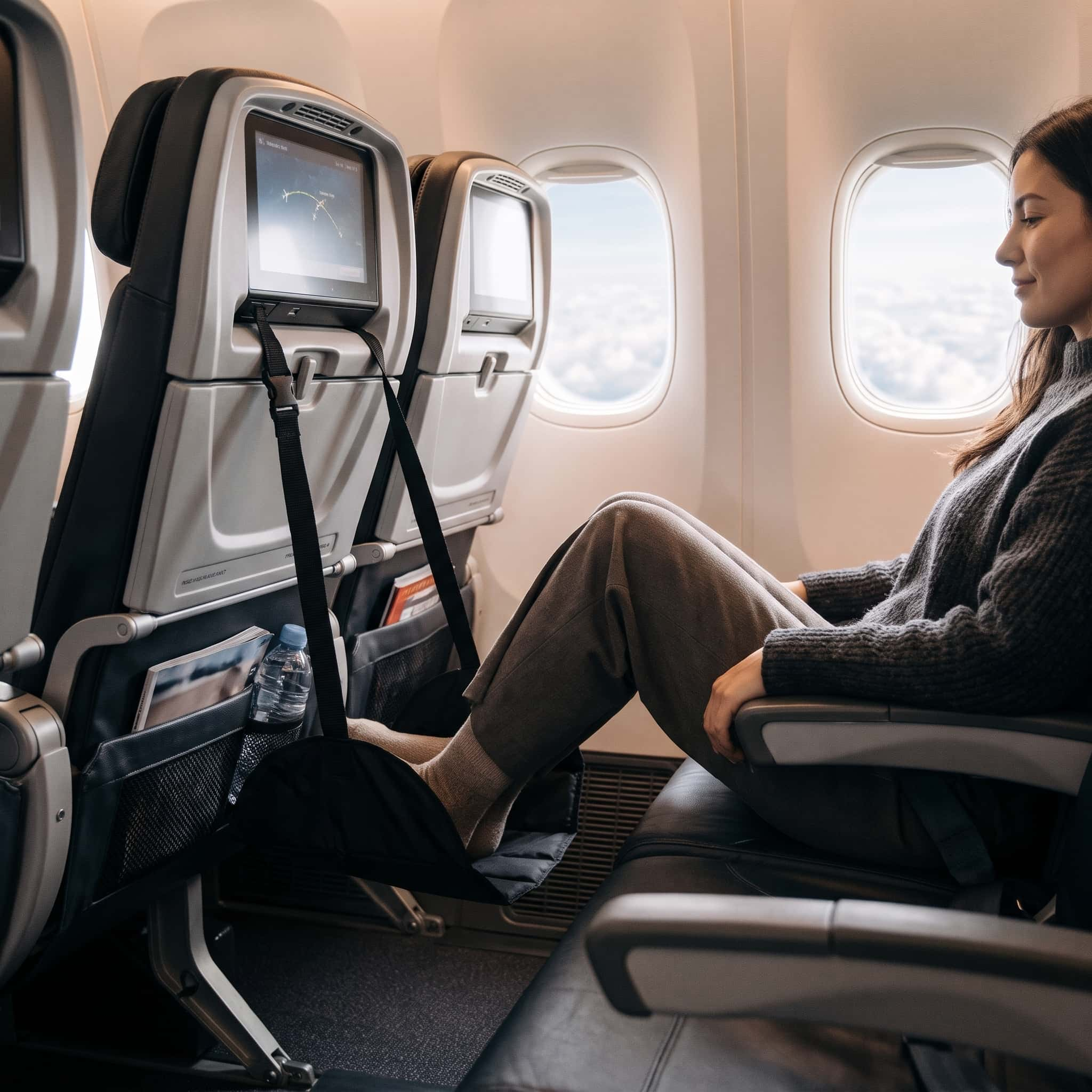
If you also want a long trip to feel shorter, our test of the airplane foot hammock explains what it really does on a plane, a train and at a desk.
Our picks for this trip
From our shop, chosen to match this guide:
 Touchscreen winter gloves, windproofNeoprene-type fabric, non-slip palm, touchscreen on thumb and index, 115 g. Sizes M to XXL.€14.90
 GlobalSilentWalks knit beanieTo complete the pair when the thermometer drops below zero.€24.90
 Rechargeable hand warmer and power bankFor very cold hands and winter layovers, with a phone-charging function.€22.90
Plan your trip & start walking
Check your palm size, test the touchscreen before you leave and keep the pair dry. A winter walk starts with hands that stay mobile.